
'/%3E%3C/svg%3E)



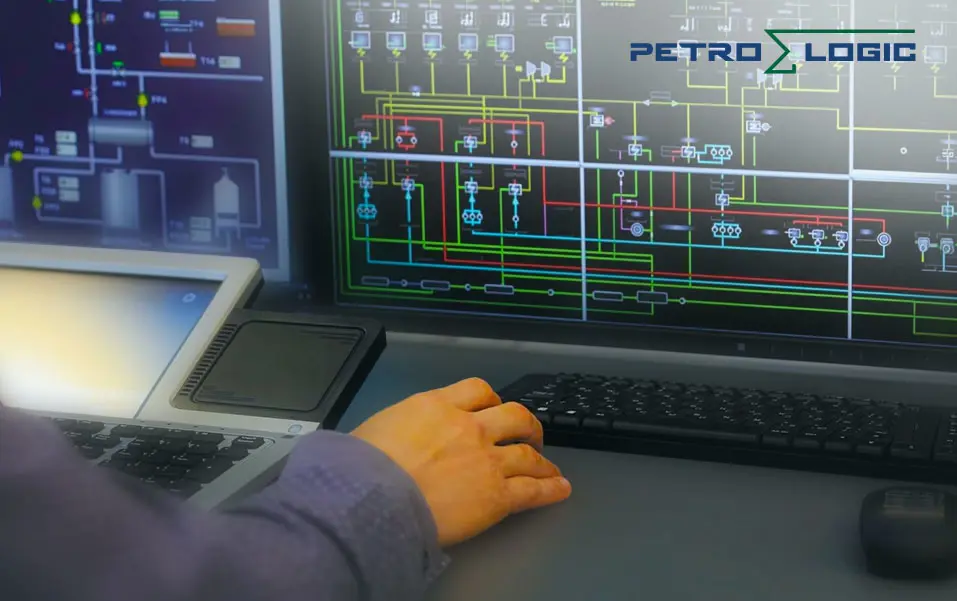
Programming logic controllers (PLCs) and developing SCADA interfaces is the stage at which a process flow diagram becomes a live, manageable process. We create software that takes over routine control, eliminating human error and ensuring pinpoint accuracy in algorithm execution.
What we offer:
● Development of algorithms of any complexity: From simple logical operations to multi-level control systems for distributed objects.
● Process Visualization (SCADA): We create intuitive interfaces that allow the operator to see the actual status of nodes, load graphs, and event archives in real time.
● Protocol Integration: Setting up stable data exchange between equipment from different manufacturers (Modbus, Profibus, Ethernet/IP, etc.).
Well-designed code not only ensures stable operation today but also the ability to easily scale the system tomorrow. We write transparent and documented software that is easy to maintain and upgrade.
— Stability: the code is written so the system doesn’t freeze or lose connection with equipment.
— Transparency: you receive documented solutions that are easy to share with any specialist for support.
— Minimal errors: automation eliminates human error, which immediately reduces defects.
— Integration: all production components work together, providing a complete picture of what’s happening on the shop floor.
 Address
Uzbekistan, Tashkent region, Bostanlyk district, Yoshlik MFY, Farogat str., 20A
 Phone numbers
 E-mail
info@asmex.uz
 Linkedin
 Instagram
 Telegram
 Download the catalog