




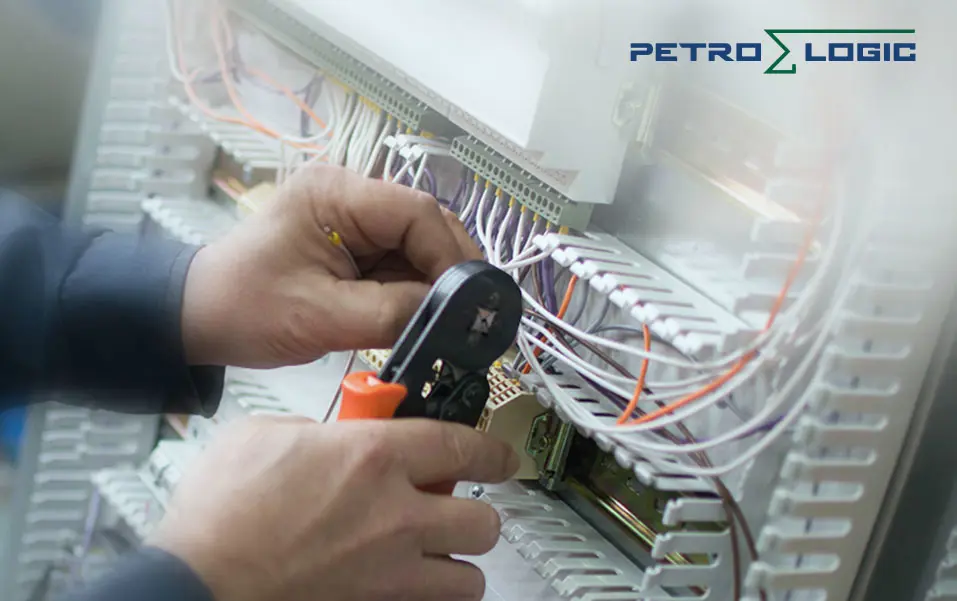
Industrial equipment can last for decades, but its electronic components become obsolete much faster. Modernization of APCS is the most effective way to increase production profitability without capital expenditures on replacing machines or production lines.
Key objectives addressed by modernization:
● Reduced downtime: Replacing worn components and switching to modern components minimizes the risk of sudden failures.
● Increased accuracy: New controllers and algorithms allow for more precise process tuning, reducing defect rates and raw material consumption.
● Informativeness: The implementation of modern diagnostic tools allows us to identify system bottlenecks even before an accident occurs.
We conduct an audit of the current state of automation and offer a phased upgrade plan. This allows for the modernization of workshops without lengthy shutdowns of the main production line, maintaining the normal operating rhythm of the enterprise.
– Real savings: you get the features of modern equipment at a price several times lower than a complete fleet replacement.
– Transparency: instead of analog gauges and operator guesswork, you get clear graphs and reports on system operation in real time.
– Reduced defects: modern algorithms eliminate errors due to human error or instability of old automation.
 Address
Uzbekistan, Tashkent region, Bostanlyk district, Yoshlik MFY, Farogat str., 20A
 Phone numbers
 E-mail
info@asmex.uz
 Linkedin
 Instagram
 Telegram
 Download the catalog