
'/%3E%3C/svg%3E)



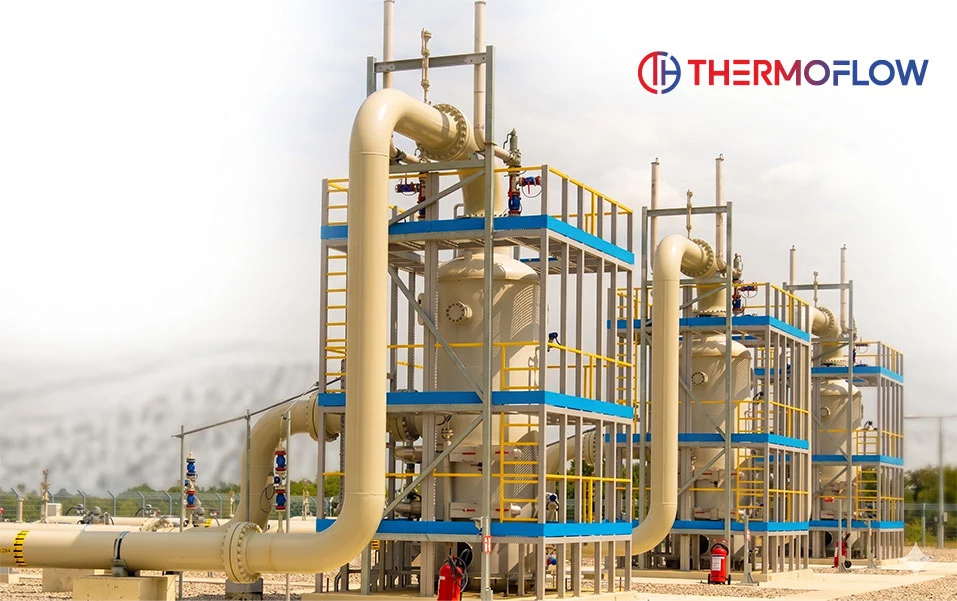
In raw material preparation process lines, equipment that accurately separates streams into components with different properties plays a key role. Industrial separators operate by exploiting differences in density, particle size, and other physical characteristics of the medium. They are used in oil and gas processing, as well as in chemical processes that require consistent product quality. Separation allows for the removal of water, mechanical impurities, and heavy components, thereby increasing the efficiency of subsequent processing stages. The design is tailored to specific operating conditions and can operate at high pressures and temperatures without loss of performance. Thermoflow industrial separators can be integrated into new and existing installations without complex redesigns. You can order industrial separators in Tashkent tailored to your specific throughput, medium composition, and operating mode. Using industrial separators primarily protects the entire system. They effectively relieve unnecessary loads from the primary equipment, directly reducing component wear and extending their service life. When each component of the flow is properly separated, the process line operates smoothly and efficiently. As a result, overall production efficiency increases, and costs for unscheduled repairs and spare parts replacement are significantly reduced.
Each unit is designed with seismic loads and climatic conditions in mind for the operating region. High precision pressure vessel manufacturing is confirmed by X-ray weld inspection. Our technological solutions allow separators to be integrated into any automated process control system, guaranteeing reliable operation of pressure vessels.
| Characteristics | Value (approximate) |
| Internal volume of the device | from 1.0 to 250 m³ |
| Working pressure | up to 16.0 MPa (160 kgf/cm²) |
| Residual liquid content in the gas | no more than 5 mg/m³ |
| Housing material | Carbon, low-alloy (09G2S), and chromium-nickel stainless steels |
| Type of internal components | Mesh, louver, centrifugal, and string |
| General standards and specifications | State Design Standards for Welded Steel Pressure Vessels |
| Standards | GOST, API, ASME, O’zDST |
| Service life | from 20 years |
 Address
Uzbekistan, Tashkent region, Bostanlyk district, Yoshlik MFY, Farogat str., 20A
 Phone numbers
 E-mail
info@asmex.uz
 Linkedin
 Instagram
 Telegram
 Download the catalog