
'/%3E%3C/svg%3E)



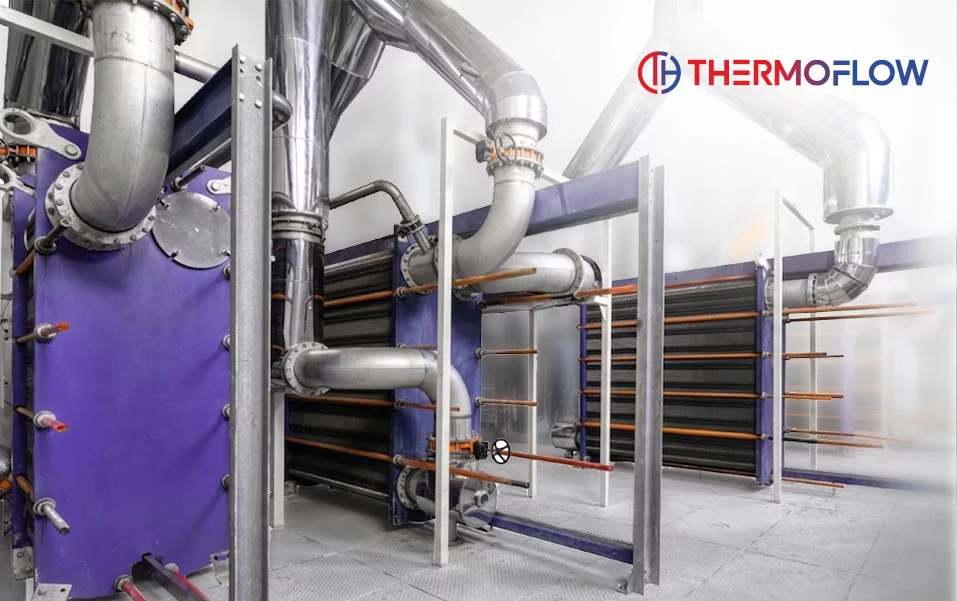
Compact and energy-efficient solutions are essential where fast and stable heat transfer is essential. They save space and resources without sacrificing power. They are the ideal choice for modern lines that require cost reduction and eliminate unnecessary energy loss. Plate heat exchangers are used to efficiently transfer heat between two media without mixing, eliminating the risk of product contamination. Their corrugated plate design creates a large heat transfer area within a relatively compact footprint. Plate heat exchangers are suitable for heating, cooling, and heat recovery processes in the oil and gas, chemical, and food industries. Thermoflow equipment is easy to maintain, can be disassembled for cleaning, and upgraded by adding plates as the load increases. This is especially important when expanding production or changing operating modes. This solution reduces energy consumption, stabilizes processes, and ensures reliable system operation even under intensive use. You can order a plate heat exchanger in Tashkent right now by writing or calling us using the contact numbers on our website.
Plate profile engineering is optimized for the viscosity and temperature of your working fluids. High-precision seal manufacturing prevents circuit mixing and leaks. Technological solutions using special alloys (titanium, Hastelloy) allow for handling aggressive acids, ensuring equipment longevity.
| Characteristics | Value (approximate) |
| Heat Transfer Surface Area | from 0.5 to 3000 m² |
| Design Pressure | up to 4.2 MPa |
| Operating Temperature | from -50°C to +200°C |
| Corrugated Plate Material | AISI 304, AISI 316L, Titanium, Hastelloy C-276 |
| Interplate Seal Material | NBR, EPDM, FKM (Viton) |
| General Standards and Specifications | Interstate Specifications for Gasketed and Brazed Plate Heat Exchangers |
| Standards | GOST, API, ASME, O’zDST |
| Service Life | Unit frame — up to 25 years; seals — 3 to 5 years |
 Address
Uzbekistan, Tashkent region, Bostanlyk district, Yoshlik MFY, Farogat str., 20A
 Phone numbers
 E-mail
info@asmex.uz
 Linkedin
 Instagram
 Telegram
 Download the catalog