
'/%3E%3C/svg%3E)



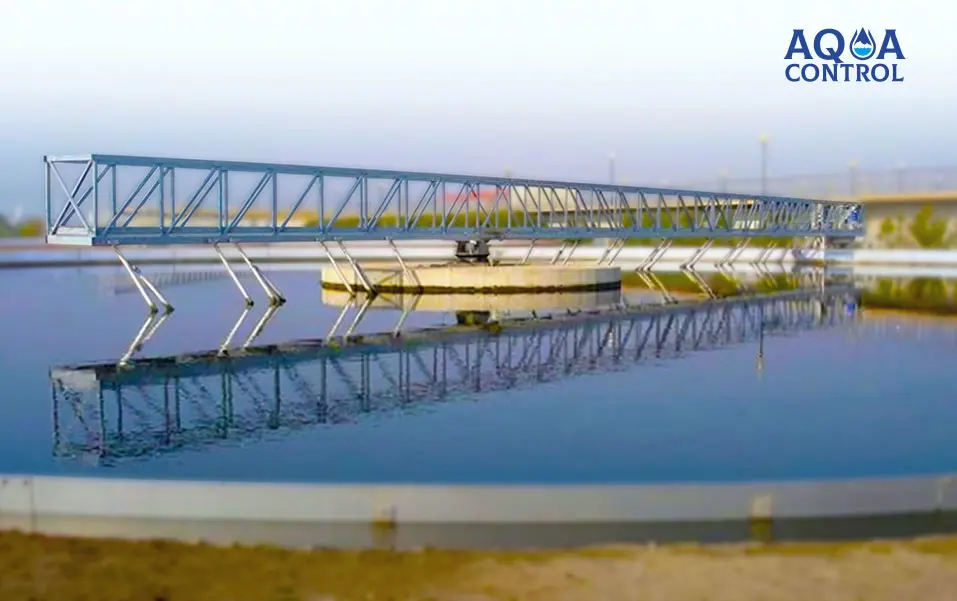
This equipment uses a peripheral drive. Wastewater enters the tank through a central inlet pipe and, after being uniformly distributed through a
constant flow pipe, flows radially and evenly outward. Suspended
sludge settles to the bottom of the tank. The drive unit rotates the working bridge along the periphery, which also rotates the scraper arm and scraper plate. The scraper
plate collects the sludge and pumps it into the central sludge trap, using the static water pressure inside the tank. The sludge is then discharged from the tank through a
central sludge discharge pipe. Floating foam on the water surface is directed into a
foam removal hopper and removed from the tank through a rotating skimmer.
The clarified liquid overflows into the outlet channel through a triangular overflow plate and is discharged from the tank. A scraper-suction machine with peripheral transmission is suitable for radial-flow settling tanks with a central inlet, peripheral outlet, and central sludge discharge in large, medium, and small tanks. It is primarily used for suction and discharge of sludge into secondary settling tanks of municipal wastewater treatment plants.
Each machine is designed to precisely match the geometric parameters of your tanks and the characteristics of the sludge being removed. Highly accurate scraper mechanisms ensure complete bottom cleaning without dead zones. We offer technological solutions resistant to the aggressive environment of wastewater and guarantee the stability of the settling tank’s hydraulic operation.
 Address
Uzbekistan, Tashkent region, Bostanlyk district, Yoshlik MFY, Farogat str., 20A
 Phone numbers
 E-mail
info@asmex.uz
 Linkedin
 Instagram
 Telegram
 Download the catalog