
'/%3E%3C/svg%3E)



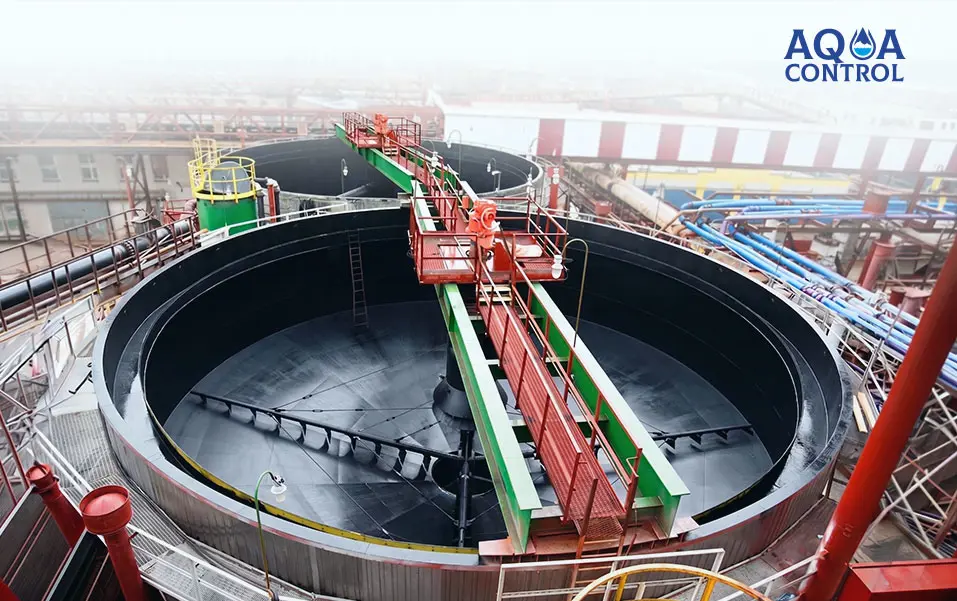
Product review: Micro bubble flotation machine
Flotation machines are generally used for liquids/solids separation in processes of water treatment. They generate micro bubbles which are then supplied into water through dissolved air and exhaust system. The bubbles attach to solid or liquid particles in waste water with density close to water density. Based on floatation principle, these particles float to the water surface providing liquids/solids separation.
Sphere of application:
Micro bubble flotation machines are used in the sphere of water treatment for the following purposes:
Removal of suspended substances, waterweeds and other microaggregates from waste waters.
Extraction of valued components, such as cellulose, from industrial waste water (for example, from paper industry waste water).
The engineering of the aeration modules ensures a uniform gas cloud density throughout the entire work area. Highly precise diffuser manufacturing prevents rapid fouling and corrosion. Fine wastewater treatment solutions enable water reuse in production, ensuring compliance with environmental standards.
 Address
Uzbekistan, Tashkent region, Bostanlyk district, Yoshlik MFY, Farogat str., 20A
 Phone numbers
 E-mail
info@asmex.uz
 Linkedin
 Instagram
 Telegram
 Download the catalog